Our History
RPRC sits on the original Kaiser Richmond Shipyard #1, across the channel from Richmond Terminal One.
Terminal One was constructed as the Port of Richmond's primary port in 1911. In the 1930s, the city entered an agreement with the Parr Company (later known as the Parr-Richmond Terminal Corporation) to operate it — primarily to unload crude oil from ships into storage tanks that supplied local oil refineries, to transfer ship cargo to rail cars, and to build the railroad servicing the terminal. The railroad was called, at that time, the Parr Terminal Railroad.
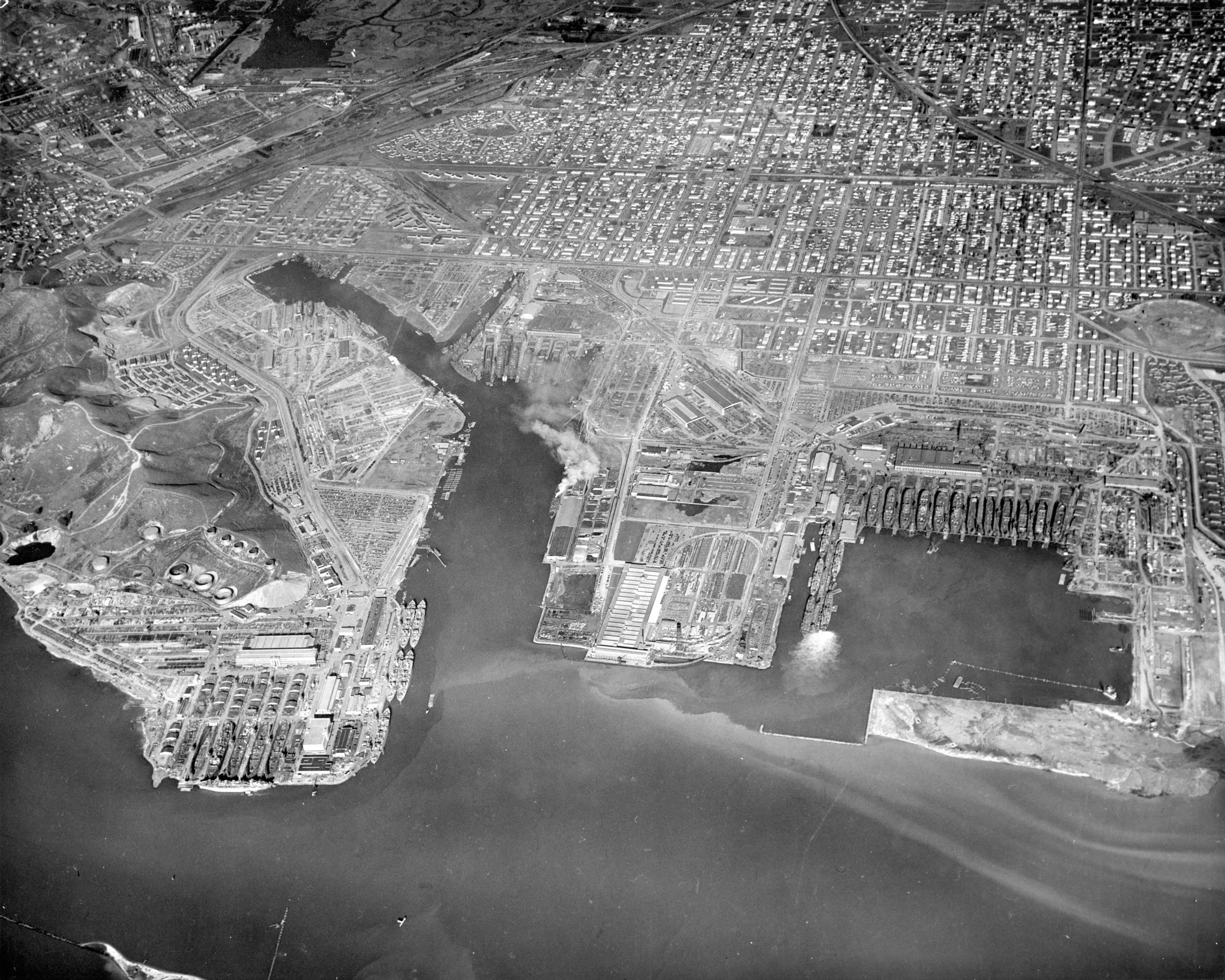
In January 1941 — during World War II — the Kaiser Richmond Shipyards, one of the biggest wartime shipbuilding operations on the West Coast, was built on Richmond's South Shoreline. As a result, the city experienced a large scale in-migration of workers, explosive growth, and a "boomtown" atmosphere that had long-term effects. In preparation for the establishment of the shipyards, the Parr Terminal Railroad was expanded, especially in the area of Kaiser Shipyard #1.
Richmond's population increased from 23,600 in 1940 to over 93,700 in 1943 as tens of thousands of workers, and their families, moved from the economically depressed South and Southwest to work in the shipyards.
The Parr Terminal Railroad, which had played an integral role in supporting the war efforts, was incorporated in July 1950 as a terminal railroad to take over the private railroad of Parr-Richmond Industrial Corporation. In 1981, the Parr Terminal Railroad, along with other Parr property on which Levin Richmond Terminal and Sims Metals sit, was sold to Levin Metals Corporation (now Levin Richmond Terminal).
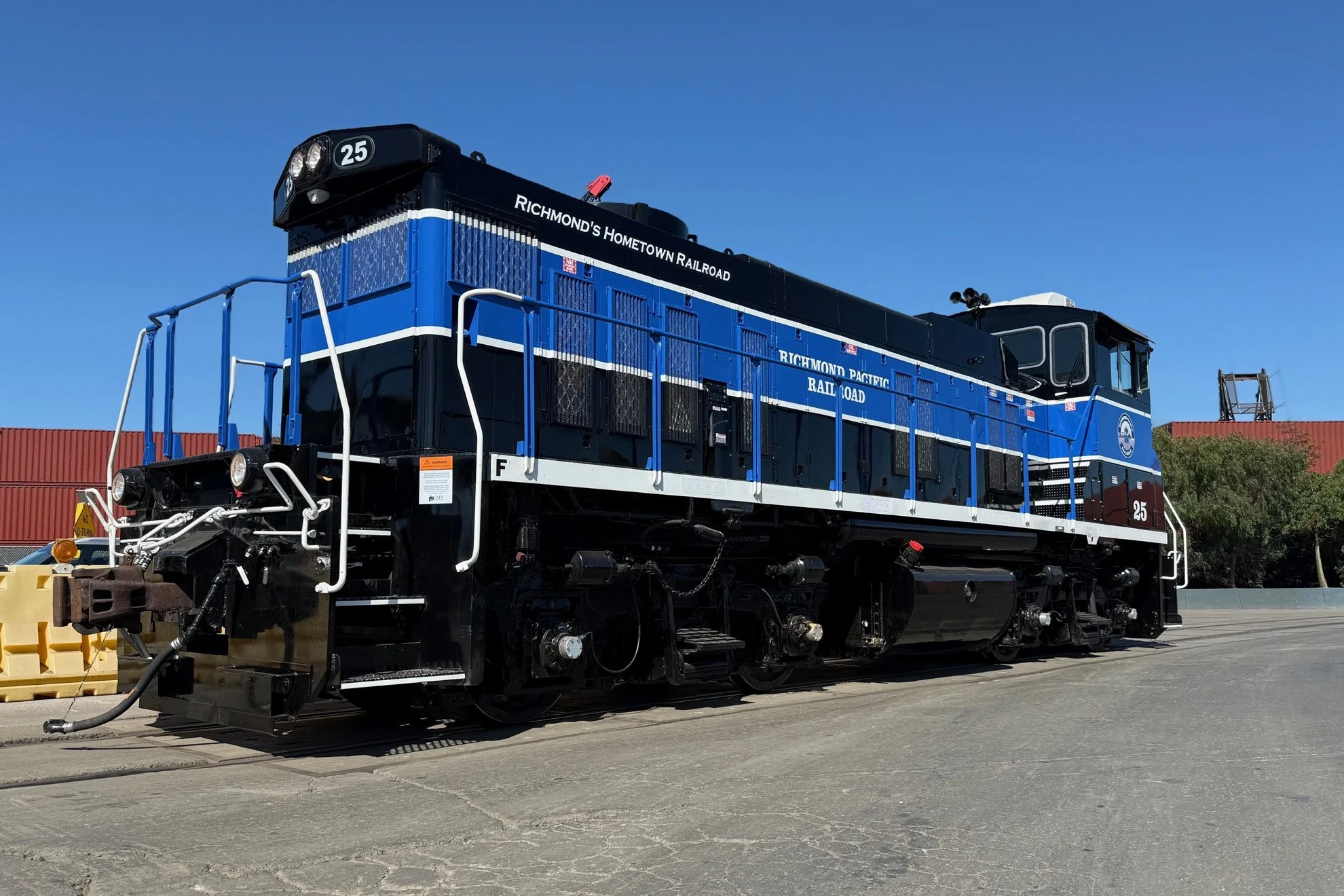
In 2002, the Parr Terminal Railroad was significantly upgraded and expanded to a full short line railroad connecting with the Union Pacific Railroad and the Burlington Northern Santa Fe Railway (BNSF) and was renamed the Richmond Pacific Railroad Corporation (RPRC).
The RPRC handles rail traffic within the Levin Richmond Terminal and switches customers within the city of Richmond. Within the terminal, the wharves are equipped with double tracks and served by a network of spur tracks. Today, the railroad services 18 customers, and continues to grow and support domestic and international commerce within the City of Richmond.